
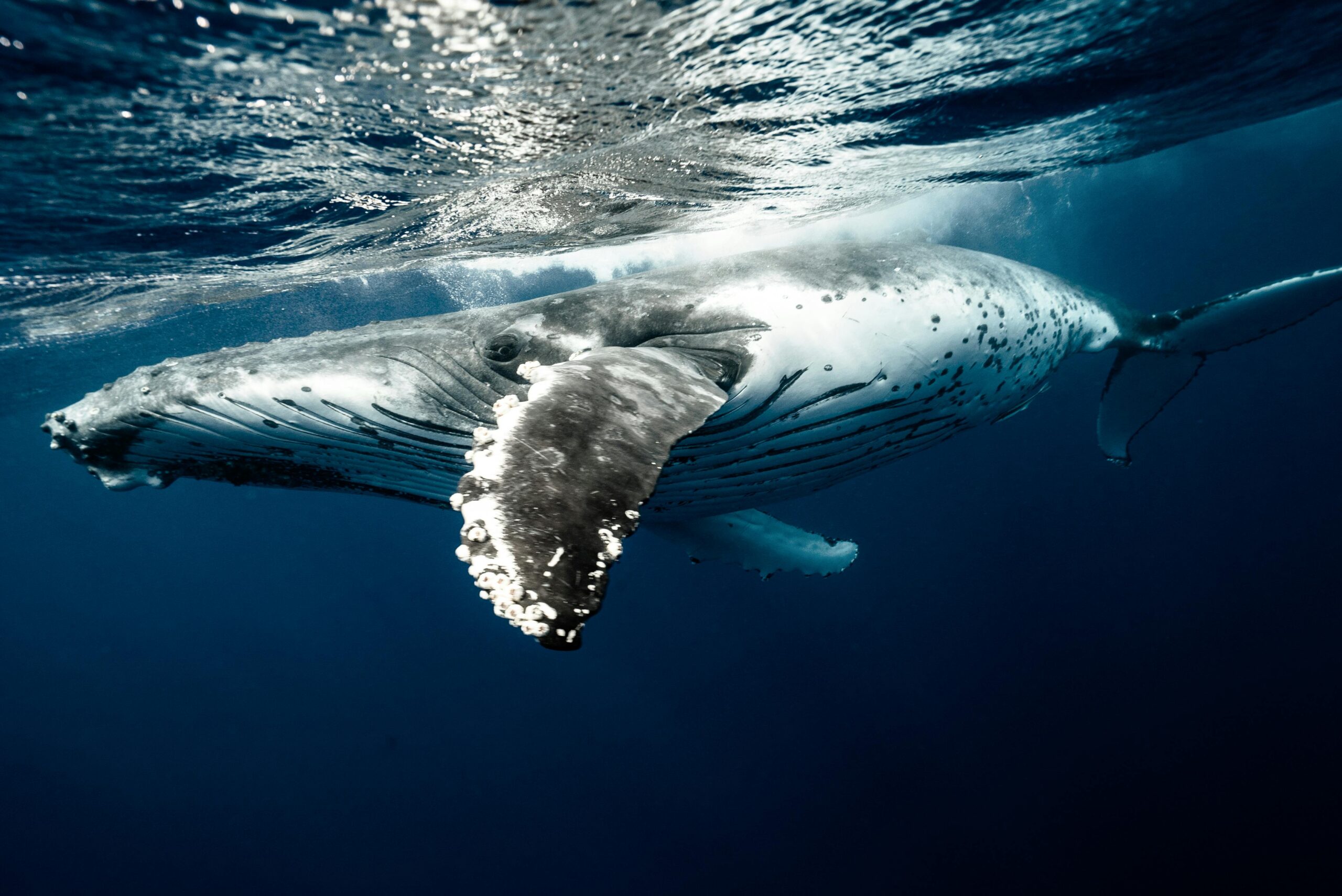
Weird Whales; 5 Five Things You Didn’t Know. Whales are mysterious creatures. This group of animals includes the largest creature to ever live. They look more like fish but they are really air breathing mammals and they are a much loved creature on our planet. There is still so much we don’t know about whales. And they are some of the weirdest creatures our planet has yet produced (yes including whatever was going on in the Cambrian).
5) Whale Evolution
Whales have a very strange history. Some time in the the Tertiary period around 50 million years ago in Early Eocene (after dinosaurs but before humans) there was a strange creature we now call pakycetus.
Pakycetus has a lot of the features of cetaceans (whales, dolphins etc.) except for the important fact that it was a land roaming quadruped. Somewhere along the line it started to dip it’s articulated toes into the waters of the ocean and decided (not consciously) that sea food was pretty good. This would set this group of animals on a trajectory to lose the use of hind legs, the migration of its’ nostrils, and growth of become the leviathans we know today as well as dolphins and co.
4) Earwax (?)
Now once whales moved into the oceans, they no longer needed external ears. Sound could travel perfectly well through the water, into their skulls and into the inner ear. But evolution does not work towards one perfect form, it works on a much more “eh good enough” kind of attitude. So whales just grew some skin over the tops of their ear holes.
This is significant because whales still have an ear canal that evolution wasn’t bothered to get rid of. And therefore they still produce earwax. This kind of gross bodily excretion builds up over time, creating layer after layer over the whales life with nowhere to go. This creates a kind of plug that researchers can extract to learn more about the whale. The chemical signals and layers can tell us about how old the whale is, any health issues, if it was stressed, and also when it was stressed.
This earwax archive of the whale’s life has given researchers huge insights into the lives of whales, especially how human activities impact them.
3) Poo (??)
Since we are on the topic of gross bodily excretions. Poo is naturally next on the list. Many whales migrate to the Southern Ocean to feed before heading north to warmer waters to breed. Krill are a vital source of this food, and they are food for many other organisms as well.
Before whale hunting was banned, it was speculated that the krill population should be through the roof. After all, whales were seriously close to being extinct. But that was not the case. Krill populations were at an all time low despite their main predator being almost non existent.
When a species, or group of animals such as whales are removed from an ecosystem, it sends a shockwave through the whole food chain. Especially if it is what is called a keystone species like a whale. This is when a species has a disproportional effect on it’s ecosystem (usually for the positive).
What had happened as we now know, the southern oceans were depleted of iron. The krill, could not survive without this vital nutrients.
Whales are the main source of iron in the southern ocean. And this is shared with the ecosystem via their super sized, gooey, often brightly coloured from shrimp, poos.
2) Super size
How could anyone not mention just how truly enormous these creatures are? But what is more interesting is how it is possible at all for them to get this huge. For one they don’t have to support the weight of their bodies on land as they live in the ocean. SO that is one thing sorted. But more recently scientists have been looking at how they can get this big due to health.
Any cell, has a chance to become cancerous. And naturally, if you have more cells, you have more chance of cancer (this increase is miniscule. It would only be a concern if you as big as a whale so human variation in size is not a factor in risk. Whales are huge and have so many cells it is surprising that they haven’t had more issues with cancers. So some very clever people worked out that whales have a special ability to heal DNA that would otherwise cause cancerous cells to grow.
This has very interesting implications on how we might be able to use this for healthcare in humans and other organisms, though more research will be required.
1) Whale Song
Whales are nature’s most soulful singers. The most famous is the haunting male humpback song. It is thought to be sung for finding a mate. But that is just the tip of the iceberg of whale vocalisations. Chirps, clicks, barks, snorts and grunts are also used. Whales have a rich language in which to communicate with each other, and it can also be used for echo location in the murky ocean.
Whales have different songs, or languages as such in different regions just as humans do. Some researchers have also deciphered some calls. There are calls to refer to calling to and playing with their young, mating calls and other things but that would simply take too long to write about all of them.
Whale song is not only beautiful and a popular sleep sound track but a complex language for communication.
Leave a Reply